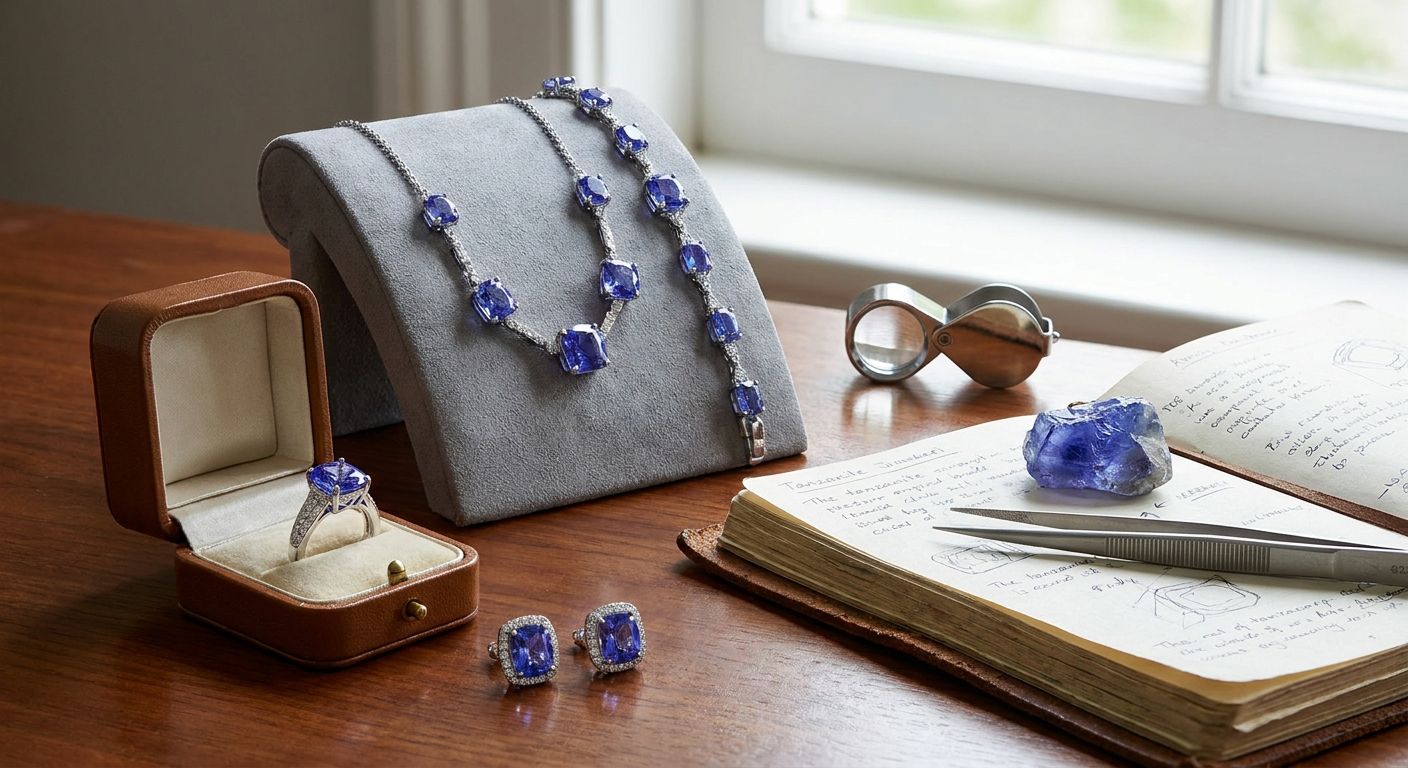
Tanzanite jewelry for gemstone collectors is jewelry chosen for gem-grade color, clarity, and single-locality rarity, with the aim of building a collection whose value tracks scarcity rather than trend. Collectors don't buy the first blue-violet stone that catches light under a jewelry counter lamp — they buy against grading criteria, treatment disclosure, and provenance records, because tanzanite comes from one mining area on earth and every purchase decision either respects that scarcity or ignores it.
- Tanzanite jewelry collectors should grade on trichroism (blue, violet, burgundy shift) before price, not after.
- Tanzanite is mined only near Merelani, Tanzania, so origin verification matters more than with sapphire or ruby.
- Heat treatment is standard in this market — undisclosed treatment is the single biggest red flag at auction in 2026.
- Independent appraisal before bidding beats any seller-provided certificate, especially on estate lots.
- Calibrated commercial tanzanite and investment-grade AAA stones are different collecting strategies, not the same purchase at different prices.
Why tanzanite jewelry matters for gemstone collectors
Tanzanite is a single-source gem. Every stone on the market traces back to the Merelani Hills near Mount Kilimanjaro, mined since 1967, and that geography is the entire investment thesis for collectors. Unlike sapphire or ruby, which come from a dozen countries with varying supply, tanzanite's finite geologic footprint means a well-documented, well-graded stone doesn't compete against an endless stream of new deposits.
That scarcity is also why fakes and misrepresented treatments show up constantly in the secondary market. Glass, synthetic forsterite, and dyed iolite get passed off as tanzanite in listings that look legitimate at a glance. Before bidding on anything described as tanzanite, run it against the checklist in how to spot fake gemstones at online auctions — the same red flags (too-perfect color, no lab paperwork, seller can't answer origin questions) apply directly to tanzanite lots.
For gemstone collectors specifically, the calculation is different from a buyer picking an anniversary gift. A collector is paying for the stone's grade and story, not just its color — a mounted tanzanite ring with no disclosed treatment history is a different asset than the identical-looking stone with a lab report and chain of custody.
How to evaluate tanzanite jewelry as a collector
Learn the color and trichroism grading first
Tanzanite is trichroic — it shows blue, violet, and burgundy-red depending on the angle it's viewed from, and cutters orient the rough to maximize the blue-violet face buyers want. Before you compare prices, compare color behavior.
- Check the stone under three light sources: daylight, incandescent, and LED — color shifts noticeably
- Look for even saturation across the face-up view, not just at the culet
- Ask sellers to rotate the stone on video before bidding, not just photograph it static
- Rate hue on a blue-to-violet spectrum; deeper blue-violet with minimal gray typically commands the highest grade
- Reject listings where every photo shows the same single angle
Confirm treatment disclosure
Most tanzanite on the market today is heat-treated to remove brownish undertones and intensify blue-violet color — this is standard industry practice, not a defect, but it must be disclosed.
- Ask directly whether the stone is heated or untreated
- Untreated tanzanite is rare and should carry a lab report stating so explicitly
- Treat "natural color" claims with skepticism unless backed by a gemological lab, not a seller's word
- Cross-reference the listing description against any attached certificate line by line
- Walk away from any seller who won't answer the treatment question directly
Set your acquisition budget before you browse
Collectors overspend when they shop lot by lot instead of against a plan. Decide your ceiling for the year, then allocate it across stone grade, setting quality, and provenance premium before you place a single bid.
- Separate your budget into "stone," "setting," and "documentation/appraisal" line items
- Set a hard maximum bid per lot and write it down before the auction opens
- Reserve a portion of the budget for post-purchase independent appraisal
- Track total spend across the year, not just per auction
- Review the full framework in how to set a budget for online jewelry auctions before your next bid
Get independent appraisal before you commit
A seller's description is a starting point, not a verdict. Estate and antique tanzanite pieces in particular carry mounting age, prior repairs, and stone treatments that only show up under an independent loupe.
- Request a pre-bid condition report on estate and vintage lots
- Commission independent appraisal on any purchase above your comfort threshold
- Compare the appraisal's treatment findings against the auction listing
- Follow the process outlined in how to appraise estate jewelry before bidding for lots described as antique or estate
- Keep every appraisal document filed with the piece, not just in email
Build a collecting strategy, not a shopping habit
Decide early whether you're collecting calibrated commercial-grade tanzanite for consistent, matched pieces, or chasing rare investment-grade stones one at a time. These are different disciplines with different research loads.
- Calibrated collecting favors matched sets — earrings, pendant, ring in the same grade
- Investment-grade collecting favors single standout stones with full documentation
- Decide which lane you're in before bidding, not mid-auction
- Track each acquisition's grade, treatment status, and price against the others in your collection
- Revisit your strategy annually as your budget and goals shift
Check mounting and metal quality, not just the stone
A gem-grade tanzanite in a poorly made mounting loses resale value fast. Prong wear, base metal substitution, and old repairs all affect what the piece is worth as a whole.
- Inspect prongs for wear or prior repair under magnification
- Confirm metal purity markings match the listing description
- Check for solder marks indicating resizing or resetting
- Ask whether the setting is original to the stone or a later remount
- Weigh mounting condition into your maximum bid, not just the carat weight
Track provenance on every piece you add
Provenance protects resale value and authenticates the story collectors actually pay for. A tanzanite ring with a documented ownership chain outperforms an identical stone with none.
- Request any available ownership or sale history from the seller
- Keep copies of prior auction listings, receipts, and appraisals with the piece
- Note the acquisition date, price, and source for every item you add
- Apply the estate research steps in how to research provenance before an estate jewelry auction to tanzanite estate lots specifically
“If a tanzanite's color looks flawless in every photo but the seller won't discuss treatment, the paperwork is missing, not the flaw.”
Comparing tanzanite acquisition paths for collectors
| Option | Best for | Key limitation |
|---|---|---|
| Loose certified tanzanite stones | Collectors building a matched or graded set | Requires separate setting cost and jeweler relationship |
| Vintage tanzanite jewelry (estate) | Collectors who value provenance and design history | Mounting wear and undisclosed prior repairs are common |
| New tanzanite jewelry | Collectors who want current-cut stones with fresh certification | Less scarcity story than estate or antique pieces |
| Calibrated commercial-grade tanzanite | Building matched sets on a defined budget | Lower ceiling for future appreciation vs. investment-grade |
| Investment-grade AAA tanzanite | Collectors prioritizing long-term value over quantity | Fewer lots available; longer search time per acquisition |
For a comparison of how this plays out with a different single-origin-sensitive stone, the grading and sourcing logic in best gemstone auctions for sapphire buyers runs on a similar framework, even though sapphire sourcing is far more geographically spread than tanzanite's.
Common mistakes tanzanite collectors make
- Buying on color photos alone. Tanzanite's trichroism means a single still image hides how the stone actually behaves in hand.
- Skipping the treatment question. Heat treatment is standard and acceptable — not disclosing it, or not asking about it, is the mistake.
- Ignoring the mounting. Collectors fixate on carat and color grade and forget that a worn or remounted setting drags down resale value.
- Treating every tanzanite lot as investment-grade. Most tanzanite on the market in 2026 is commercial or calibrated grade — pricing it like a rare find is how collectors overpay.
- Skipping independent appraisal on estate lots. A seller's estate description is not a lab report, and older tanzanite settings carry more repair history than newer pieces.
Browse current tanzanite lots
See graded and estate tanzanite pieces available now on Jewelryroom.com.
FAQ
What makes tanzanite jewelry valuable to collectors in 2026?
Tanzanite's value to collectors comes from single-source scarcity — it's mined only near Merelani, Tanzania — combined with color grade, trichroism strength, and treatment disclosure. A well-graded, well-documented stone holds value differently than an undocumented one of similar size.
Is heat-treated tanzanite worth collecting?
Yes, heat-treated tanzanite is the industry standard and makes up most of the market in 2026. What matters for collectors is disclosure, not treatment itself — undisclosed treatment is the red flag, not the treatment.
How do you tell if tanzanite jewelry is real before bidding?
Check color behavior under multiple light sources, request a gemological lab report, and confirm the seller can answer origin and treatment questions directly. The checklist for spotting fakes at online auctions applies directly to tanzanite lots.
Is tanzanite rarer than sapphire?
Tanzanite is geographically rarer — it comes from one known mining area near Mount Kilimanjaro, while sapphire is sourced from multiple countries. That single-source origin is central to why collectors treat tanzanite differently from other blue gemstones.
Should collectors buy loose tanzanite stones or finished jewelry?
Loose certified stones give collectors control over the eventual setting and are easier to grade independently. Finished vintage or estate tanzanite jewelry adds provenance value but requires checking mounting condition and treatment disclosure together.
What's the biggest risk buying tanzanite jewelry at auction?
Undisclosed treatment and misrepresented origin are the top risks, followed by mounting damage on estate pieces that isn't visible in listing photos. Independent appraisal before bidding addresses both.
How does tanzanite grading affect resale value?
Deeper blue-violet saturation with minimal gray tone commands higher resale value, along with documented treatment status and provenance. Two visually similar stones can have meaningfully different resale value based on paperwork alone.
One last thing
Tanzanite is a young gem by trade standards — it wasn't identified until 1967 — which means the documentation trail on any piece older than a few decades is thinner than what collectors expect from ruby or emerald estate jewelry. Treat every pre-2000 tanzanite piece as needing fresh appraisal, not inherited paperwork. The single mining source that makes tanzanite collectible is the same fact that makes sloppy documentation permanent — there's no second deposit to cross-check a stone against.


